As luck would have it, thanks to instruction from an enlightened Joshua on her first voyage, Mary was well versed in the art of navigation; she knew how to read the wind and tides, how to calculate the ship's position with sextant and chronometer, how to work out a course to steer and how to record the ship's progress. Drawing on these skills, and earning the loyalty of the anxious crew with an impressive display of oratory delivered from the poop deck, she got on with the job of dealing with everything which the cruel sea (and a mutinous first mate) could throw at her. She finally helmed the vessel into San Francisco Bay on 15 November and was soon besieged by admiring reporters.
In a tragic twist of fate, Mary was to lose her husband just four months after the birth of their son - named after his father - and although she managed to survive the ordeal of the Southern Ocean, it had taken its toll on her health. She died of consumption shortly before her 25th birthday.
It is difficult to overestimate the scale of Mary Patten's achievement. 'Below 40 degrees there is no law, below 50 degrees there is no God' so the saying goes. Cape Horn, the deepest continental point on the planet, lying almost at the bottom of the world in the 'furious fifties' and just 500 miles from Antarctica, certainly sounds like a Godless place!
Here, where the Pacific and the Atlantic oceans meet to do battle in storms that occur on average for 200 days of the year, waves regularly top 65 feet and have been known, on rare occasions, to reach an unimaginable 120 feet.
It is not simply a case of two oceans meeting, however. A multitude of factors combine to lend Drake's Passage - the 400-mile-wide stretch of water between the Horn and Antarctica - its ferocity. The Andes mountains form an effective block, 1,200 miles wide, to the predominantly westerly winds, forcing them south through the gap which is Drake's Passage. And whilst the wind funnelling through this narrow gap gathers pace, to too do the already rapid currents, which are made all the more stormy due to the steep shelving of the sea bed. Francis Chichester makes a useful comparison: 'It is like the sea breaking on the beach at Bournemouth in a gale, except that the waves, instead of being 4 feet high, are likely to be 60 feet high.'
The effect of all of this is that, for the modern sailor, the experience of Cape Horn is often an uncomfortable if momentous occasion. In the great age of sail, however, it was for many a fatal journey - more than 10,000 souls have been lost rounding the Horn.
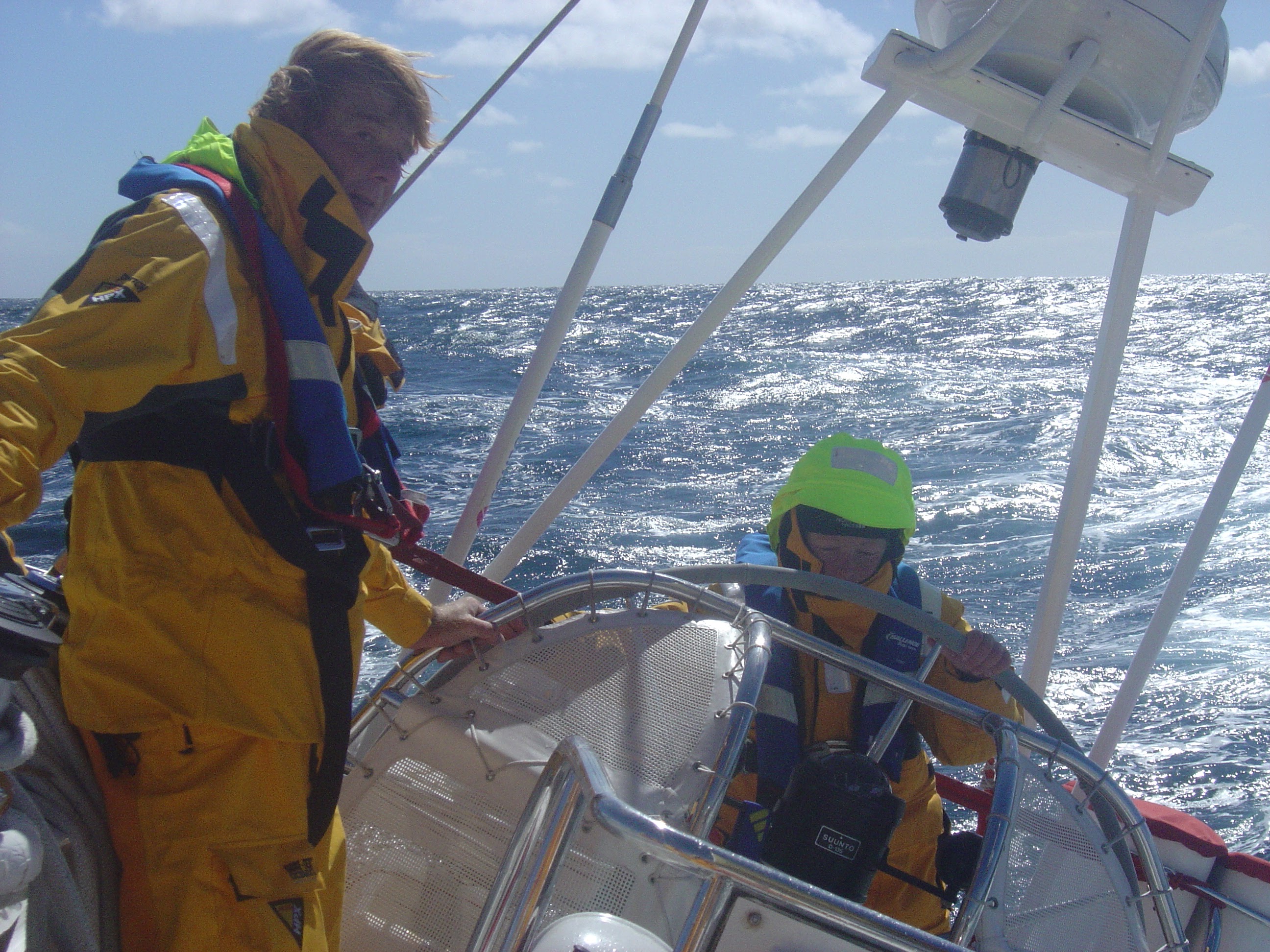
The significance of the day is not lost on the crew of BP Explorer as we prepare to join the relatively slender ranks of those who have not only had the privilege of rounding the Horn, but of doing it the 'wrong way' - i.e. east to west, against the prevailing winds and currents. Nobody back home need worry too much about our safety - we have our Goretex layers to protect us against consumption and all manner of instruments (not to mention David!) instead of a Mary Patten to get us to where we are going - but think of us as you gather around the fire with the sideways rain on the other side of the window. Out here the albatross are getting bigger by the day and the icy winds are beginning to blow.
-------------------------------------------------------------
The crew of BP Explorer are now offical Cape Horners